

Usage-based pricing. You’ve heard of it. You’ve seen the competition do it. You’ve had customers request it. Now, you’re ready to implement it but want to understand its intricacies and impact on your business. This guide will help you learn all about usage-based pricing and its effects.
Customers find this model appealing due to its direct correlation between the value received and the price paid. It offers affordability and maximizes value for money, making it highly attractive.
The subscription and sharing economy has emphasized transparency, personalized pricing, and real-time tracking. Subscriptions have simplified revenue generation recently, but a report found that 45% of SaaS companies have implemented usage-based pricing. This shift is driven by the potential for more client-oriented services and revenue growth.
What is Usage-Based Pricing?
Usage-based pricing is a flexible model where customers pay based on their actual usage of a service or product, making it cost-efficient for both customers and providers. This model, used by utilities like gas and electricity, is increasingly popular with the rise of cloud computing.
Businesses benefit from this model by charging customers accurately according to consumption, providing clear and efficient billing. It also offers insights into customer usage patterns, helping to forecast future consumption. Additionally, usage-based pricing expands the market, enhances customer satisfaction, and reduces churn, especially during seasonal usage fluctuations.
Types of usage-based pricing models
1. Per-Unit Usage Pricing
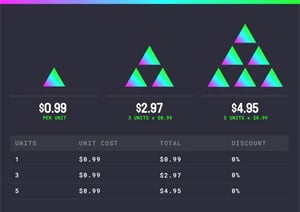
Per-unit usage pricing is a subscription model that charges users on a per-unit basis rather than charging them for the amount of time they have the service active. This means that customers who consume more will pay more, and vice versa.
2. Tiered pricing
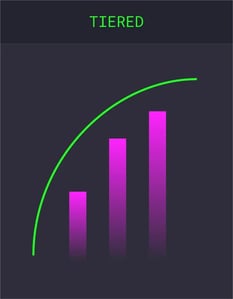
Tiered pricing is a pricing model that helps you capture more customers by incentivizing them to use your product or service in greater amounts. Instead of paying a set price per unit, your customers’ price per unit decreases as a certain tier volume is reached. With this model, your customer’s subscriptions are adjusted or right-sized based on tiers or bands of usage.
3. Volume pricing
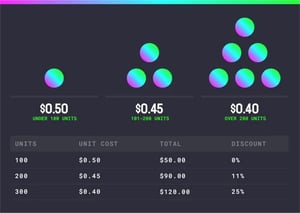
Volume pricing is similar to tiered pricing in that there are different tiers of discounts. However, with volume pricing, customers get the same discount on all items once they hit a certain tier.
Volume pricing is a great strategy for encouraging customers to buy more products by offering discounts when they do. This creates greater value for their money, and they’re more likely to buy your product or service.
4. Dynamic usage-based pricing
Dynamic usage-based pricing lets you define your custom pricing models and allows you to easily adjust the prices of your products. This pricing model adapts to your business and lets you set prices based on the region or location of the customer, customer demand, value to the customers, time or date of the service used, etc.
5. Drawdown consumption pricing
With the Drawdown Consumption Pricing Model, you can create a flexible pricing model by defining a budgeted spend for multiple services. Customers can draw down on the allocated amount, based on the services they consume. You can also provide top-ups if they go over their limit and warn customers when they are close to their set thresholds. With this model, you have also the flexibility to configure tiered or rollover models.
Benefits of a Usage-Based Pricing Model
- Lower Upfront Costs – A low initial investment attracts a broader customer base, leading to increased sales.
- Transparent Pricing – Customers have real-time access to their usage history and rates, building trust and ensuring transparency.
- Improved Customer Retention – Pricing is optimized based on value received, allowing customers to pause plans during low usage periods, reducing cancellations.
- Data-Based Product and Pricing Intelligence – Granular usage data enables companies to offer customized packages, anticipate market trends, and stay competitive. This data-driven approach helps in tailoring products and services to meet customer needs better.
Challenges of Usage-Based Pricing
When you adopt a usage-based pricing model, you should spend some time studying what kinds of offers will work best for your customers. You might need to overcome a few challenges when you first introduce usage-based pricing, but if you do your research and plan carefully, you’ll be able to keep your customers happy.
- Choosing the Right Value Metric – Understanding the core value metrics that align with your customer’s perceived value is crucial to avoid churn.
- Handling Overages Effectively – Transparency about changes and providing access to usage reports can help manage billing increases and prevent overages.
- Predicting Revenues – Forecasting can be challenging due to variable usage. Minimum commitment plans or pre-paid consumption models can help stabilize revenue predictions.
- Choosing the Right Pricing Model – Ensure your pricing strategy is clear and transparent to improve customer experience and control over spending.
- Onboarding Customers – Communicate the benefits and provide full access to usage metrics to ease the transition to a usage-based model.
- Selecting a Billing Solution – A robust billing system like LogiSense can efficiently track large volumes of usage data and scale with your business needs. LogiSense offers an API-driven cloud platform accessible via RESTful APIs to adapt to your unique requirements.
Forecasting Revenue with Usage-Based Pricing
Usage-based pricing models charge customers based on their usage, making revenue variable and determined by resource consumption. To forecast revenue accurately, consider historical sales data, annual recurring revenue (ARR) history, and customer usage patterns.
Key metrics for forecasting recurring revenue include:
- Annual Recurring Revenue (ARR)
- Monthly Recurring Revenue (MRR)
- Customer Lifetime Value (CLV)
- Customer Acquisition Costs (CAC)
- Customer Churn Rate
Accurate data from these metrics enrich revenue forecasts. An agile usage-based billing system can provide precise usage data, enhancing the accuracy of recurring revenue predictions.
Things to Remember Before Switching to Usage-Based Pricing
Usage-based billing and recurring revenue models are the future due to their customer-friendly nature. This model allows businesses to charge customers based on resource usage, providing flexibility. To implement this model successfully, thorough planning and strategic execution are crucial.
Here are some key considerations:
- Identify the Right Usage Metric: Choose scalable, predictable metrics that reflect the value your customers get from your product.
- Choose a Suitable Pricing Model: Determine if flat-rate, tiered, or hybrid models best suit your business and customer needs.
- Select a Robust Billing Solution: Ensure it can handle complex scenarios and integrates with existing tools.
- Automate Billing Processes: Ensure accuracy and efficiency by automating billing tasks.
- Update Marketing Materials: Align all materials with your new pricing model.
- Train Your Sales Team: Equip them with tools and knowledge to effectively sell and educate customers on the new model.
- Educate Your Customers: Provide access to usage reports and real-time data to help them understand the benefits.
Switching to usage-based pricing can enhance customer satisfaction and drive revenue growth, but it requires careful execution and continuous support.
Is Usage-Based Pricing Right for Your Company?
Usage-based billing benefits both companies and customers. Customers only pay for what they use, and companies gain more satisfied customers. While it suits many SaaS businesses, it may not fit all. For those that can benefit, the advantages are significant.
The following businesses benefit most from usage-based billing:
- Cloud apps and infrastructure
- IoT companies
- SaaS companies
- Utility companies
- Telecom businesses
- Financial services with high transaction volumes
- OTT service providers and streaming companies
- Telematics industry
If your customers seek flexibility and convenience, consider switching to a usage-based billing model. This is ideal for businesses offering high-volume transactional services and tracking customer usage.
Must-Have Requirements for Usage-Based Billing Software
- Scalability & Adaptability A scalable billing solution must accommodate your evolving business model and automate billing processes to avoid errors and inefficiencies.
- Automation Full automation is crucial for handling billions of usage events, streamlining billing cycles, and reducing revenue leakage.
- Robust Mediation Engine An advanced mediation platform is needed to automate real-time data normalization, ensuring accurate and complete invoices.
- Business Agility Your billing solution should support real-time updates to product catalogs and pricing structures without extensive custom development.
- Reporting & Analytics Comprehensive visibility over customer behavior and key metrics helps predict trends and create sales opportunities. LogiSense offers a flexible reporting framework to track customer activity and usage history.
- Compliance A billing platform must secure sensitive data and comply with regulations like GDPR and CCPA, ensuring customer data protection and regional data processing.
Embrace the Future of Billing with Usage-Based Pricing
Transitioning to usage-based billing is crucial as XaaS customers demand more flexible pricing models. Many competitors have already made the switch. To stay competitive, you may need to upgrade existing systems and educate customers about the benefits of usage-based plans. With a reliable usage-based billing system, you can accurately meter customer usage and offer personalized plans that delight customers.
Explore how LogiSense can elevate your revenue potential by applying for a FREE 30-day Test Drive or scheduling a demo with our billing experts.
Comments