
The Usage Economy Summit 2024 has concluded, marking a pivotal moment in the evolution of business models across industries. Bringing together thought leaders, innovators, and industry experts, the summit underscored the transformative potential of usage-based, consumption-based, and outcome-based pricing models. As these models become differentiators for SaaS, XaaS, Communications, and Connected Devices providers, the summit served as a platform to share insights, spark meaningful discussions, and lay the groundwork for a community dedicated to advancing the usage economy.
Keynote Highlights: The Usage Economy is Transforming Go-to-Market Strategies
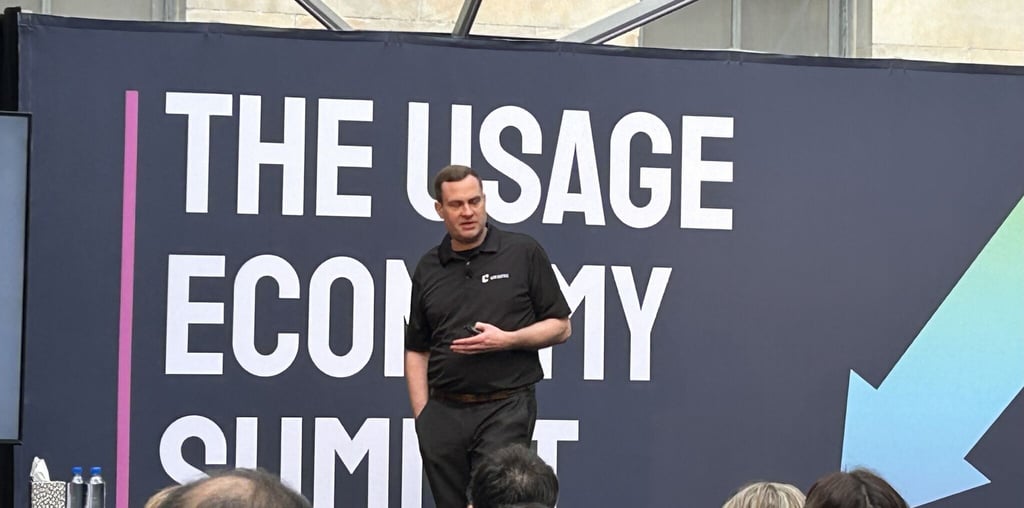
The event’s Public Keynote, delivered by Adam Howatson, CEO of LogiSense, was a cornerstone of the summit. In his talk, titled “The Usage Economy is Transforming Go-to-Market Strategies,” Adam explored the fundamental shifts driving the adoption of usage-based pricing as more than a financial model—framing it as a response to the changing expectations of consumers and businesses alike.
Adam began by contextualizing the rise of the usage economy against a backdrop of evolving social, economic, and generational dynamics. He emphasized that usage-based pricing is no longer optional; it is a necessity for businesses aiming to meet the demand for personalized, scalable, and flexible solutions. This transition is fueled by several key factors, including economic pressures and the need for clear demonstrations of value for money.
Key Takeaways from Adam’s Speech:
- Demonstrating Value for Money is Essential
Businesses must show tangible outcomes and clear ROI to earn and retain customer loyalty. Customers expect transparency and alignment between the price they pay and the value they receive. - Subscriptions Are Table Stakes
Subscription models remain the foundation of recurring revenue, but they are now considered the baseline expectation. The next evolution lies in integrating value-driven, usage-based monetization into these models. - Commercial Interactions Are Part of the Product
Adam argued that a company’s pricing and billing models are not just transactional processes—they are intrinsic to the customer experience and should be treated as an extension of the product itself. - Usage-Based Monetization Drives AI Innovation
Telemetry data from usage models can enable AI to deliver enhanced use cases both within and outside of the organization, paving the way for smarter, data-driven decision-making. - Usage-Based Monetization is Not All-or-Nothing
Success hinges on identifying the right value metrics and usage variables that resonate with customers. It’s critical to ensure customers understand what they’re paying for, creating clarity and building trust.
Adam’s keynote left attendees with a powerful call to action: embrace the shift to the usage economy to stay ahead of competitors and meet the evolving needs of modern consumers.
Next Steps in the Usage Economy Movement
The insights shared during Adam’s keynote were just the beginning of the discussions at the Usage Economy Summit. His emphasis on leveraging usage-based pricing as both a business strategy and a tool for customer empowerment resonated deeply with the audience. These themes will continue to guide businesses as they explore innovative ways to monetize their products and services in an increasingly dynamic marketplace.
Stay tuned for additional highlights from the summit, including insights from other thought leaders who addressed topics such as aligning pricing with customer outcomes, driving efficiency through connected ecosystems, and fostering long-term customer loyalty. The dialogue has just begun, and the journey toward fully realizing the potential of the usage economy is only gaining momentum.
Comments