

The telecom industry enters 2026 at a critical inflection point. Network transformation continues at pace, yet the pressure on margins, return on capital, and relevance in the enterprise digital economy has never been higher. According to GSMA Intelligence, the coming year will be defined not by technology adoption alone, but by the industry’s ability to convert innovation into measurable commercial outcomes.
The 2026 Research Themes highlight a clear message for telco executives: investment in 5G, AI, IoT, and emerging technologies must now translate into scalable services, differentiated enterprise value, and sustainable monetization models.
This is no longer a question of readiness. It is a question of execution.
The Shift From Network Leadership to Value Creation
Over the past decade, operators have invested heavily in network modernization. As we move into 2026, the focus shifts decisively from coverage and capability to value extraction.
5G Standalone, network APIs, edge computing, satellite integration, and AI-enabled operations are no longer future bets. They are production realities. Yet many operators still struggle to monetize these capabilities beyond connectivity.
The challenge is not technological maturity. The challenge is commercial orchestration.Telco leaders must ask themselves the following hard question:
How do we transform advanced network capabilities into repeatable, high-margin revenue streams?
Enterprise Digital Transformation Is the Real Growth Engine
One of the strongest signals in the GSMA research is the scale of enterprise digital transformation spending. Enterprises are allocating a growing share of revenue toward cloud, AI, IoT, cybersecurity, and automation.
This represents a structural opportunity for telcos to reposition themselves as strategic partners rather than infrastructure providers.
However, enterprise buyers are not purchasing networks. They are purchasing outcomes.
This creates three executive-level imperatives:
- Shift from product-centric offers to solution-centric monetization
- Support hybrid commercial models combining subscription, usage, and outcome-based pricing
- Enable rapid experimentation with pricing and packaging without operational friction
Operators that fail to modernize their monetization capabilities will see value captured elsewhere in the ecosystem.
AI and Usage Volatility Are Redefining Revenue Models
AI is fundamentally changing both cost structures and customer expectations.
From inference workloads and GPU services to AI-enhanced enterprise applications, consumption patterns are dynamic, unpredictable, and often non-linear. Static pricing models struggle in this environment.
For telco executives, this introduces new risks:
- Cost exposure without revenue alignment
- Inability to price AI services dynamically
- Margin erosion as usage scales faster than billing sophistication
The GSMA research makes it clear that AI monetization requires usage-aware, contract-driven billing models that can adapt in real time.
This is not a finance problem alone. It is a strategic monetization challenge that spans product, technology, and revenue leadership
eSIM, IoT, and the End of Simple Connectivity Billing
The expansion of eSIM and the next phase of IoT growth introduce unprecedented complexity into how services are priced, billed, and managed.
Enterprise IoT deployments increasingly demand:
- State-based pricing models
- Geographic and regulatory differentiation
- Lifecycle-aware billing
- Customer-specific commercial terms
As operators move beyond automotive into industrial, healthcare, logistics, and smart infrastructure use cases, billing becomes a competitive differentiator.
Executives should The expansion of eSIM and the next phase of IoT growth introduce unprecedented complexity into how services are priced, billed, and managed.
Enterprise IoT deployments increasingly demand:
- State-based pricing models
- Geographic and regulatory differentiation
- Lifecycle-aware billing
- Customer-specific commercial terms
As operators move beyond automotive into industrial, healthcare, logistics, and smart infrastructure use cases, billing becomes a competitive differentiator.
Executives should recognize that IoT scale without monetization precision is a liability, not an advantage. that IoT scale without monetization precision is a liability, not an advantage.
Network APIs and the Monetization Gap
Network APIs represent one of the most promising new revenue opportunities for telcos. However, commercial success depends on more than exposure and developer adoption.
APIs introduce:
- Event-based pricing
- Transaction-level charging
- Partner revenue sharing
- Contract enforcement across ecosystems
Without modern monetization infrastructure, APIs risk becoming cost centres rather than growth drivers.For telco leaders, the monetization strategy must be designed in parallel with the API strategy, not as an afterthought.
Security, Trust, and Billing Accuracy
The elevation of security to a standalone research theme reflects rising enterprise expectations around trust, transparency, and accountability.
Billing accuracy is increasingly viewed as part of the trust fabric. Enterprises expect:
- Transparent usage records
- Audit-ready billing
- Contractual compliance across complex service bundles
In this context, billing platforms are no longer back-office systems. They are trust systems.
What Telco Executives Should Do Now
As 2026 approaches, the GSMA research provides a clear directional signal. Execution will separate leaders from laggards.
Telco executives should prioritize:
- Aligning monetization strategy with network and AI investments
- Enabling flexible, usage-based and hybrid pricing at scale
- Reducing dependency on rigid legacy billing and ERP systems
- Treating monetization as strategic infrastructure, not operational tooling
The operators that succeed will be those that can monetize innovation as fast as they deploy it.
Final Thought
The telecom industry has never lacked technological ambition. What 2026 demands is commercial precision.
Networks enable innovation. Monetization sustains it.
For telco leaders, the path forward is clear. The question is whether execution will keep pace with vision.
AI Pricing Lessons from Telco
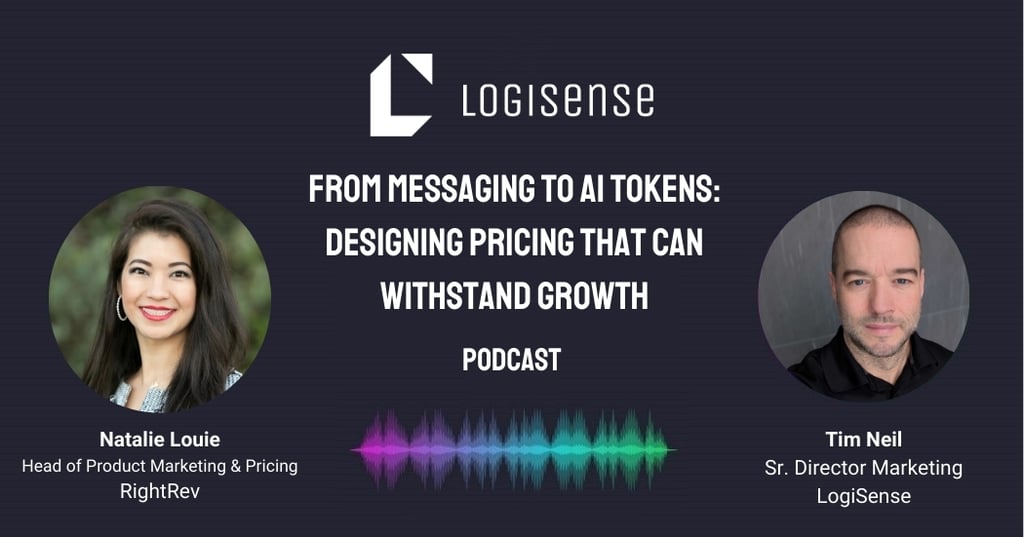
Natalie Louie, Head of Product & Pricing at RightRev, joins Tim Neil to unpack what telecom learned the hard way about usage based pricing and why those lessons matter now for AI, SaaS, and infrastructure driven businesses.
Drawing on decades of experience in SMS, voice, and carrier pricing, Natalie explains why unlimited plans, opaque costs, and discount driven sales motions quietly destroy margins as usage scales. Watch our podcast now.
Comments